
U.S. Navy Demonstrates At Sea Robotic Refueling of an Unmanned Surface Vessel
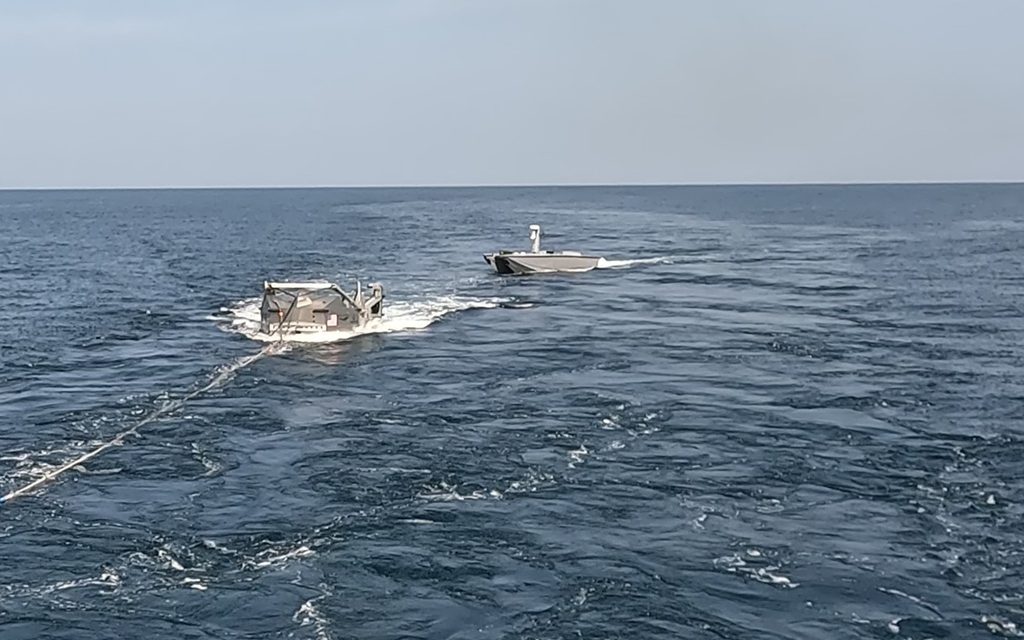
Official U.S. Navy coverage documents a major milestone in persistent unmanned maritime operations: approximately 100 connection cycles and the transfer of 400 gallons of fuel to a Navy owned MARTAC T38 using Sealartec’s robotic Towable Capture and Connection Device.
A Major At Sea Refueling Milestone
Official U.S. Navy coverage published by the Naval Air Warfare Center Weapons Division through DVIDS highlights a major step toward persistent unmanned maritime operations and Sealartec’s role in making robotic at sea refueling a reality.
During an August 2026 demonstration off Joint Expeditionary Base Little Creek Fort Story, Virginia, a U.S. Navy industry team repeatedly captured, refueled and released a Navy owned MARTAC T38 unmanned surface vessel using Sealartec’s Towable Capture and Connection Device, or TCCD.
The robotic refueling device was towed behind USNS Vindicator while the T38 approached and connected at sea. The team conducted dozens of complete capture, refueling and release exercises during the demonstration, in addition to pierside testing.
Across several days of testing, the system completed approximately 100 connection cycles and transferred a total of 400 gallons of fuel to the T38. The Navy industry team advanced the TCCD from concept to real world testing on the water in only seven months.
Extending Unmanned Missions at Sea
Unmanned surface vessels are designed to provide persistent coverage across large and potentially high risk operational areas. However, every return to port for fuel reduces their time on station, interrupts the mission and can increase reliance on crewed support vessels.
Robotic at sea refueling addresses this critical operational limitation by creating a pathway for USVs to remain deployed for longer periods while reducing human involvement in the sustainment process.
The demonstration showed how Sealartec’s technology can support distributed unmanned operations by enabling a USV to connect with a mobile refueling asset at sea, receive fuel, disconnect and continue its mission.
A Broad Navy Industry Collaboration
The demonstration brought together Naval Air Warfare Center Weapons Division’s Blue Water Instrumentation program, its Future Capabilities Office fleet management team, MARTAC and Sealartec.
The event was sponsored by U.S. Fleet Forces Command, Naval Surface Warfare Center Dahlgren Division and Naval Surface Warfare Center Carderock Division. The Littoral Combat Ship Mission Modules Program Office and the Navy’s Portfolio Acquisition Executive for Robotics and Autonomous Systems also provided contracting support.
This broad collaboration reflects the operational importance of developing reliable sustainment infrastructure for the growing fleet of unmanned maritime systems.
The Path Toward Fully Autonomous Refueling
The demonstration validated the robotic capture, connection, fuel transfer and release process through repeated operator assisted testing under real maritime conditions.
The next milestone is an end to end autonomous refueling sequence in which the USV independently conducts the rendezvous, approaches the refueling system, establishes the connection, receives fuel, disconnects and returns to its mission.
Moving from operator assisted control to a fully autonomous architecture will further reduce human dependency and help unlock the persistent, scalable operation of unmanned fleets.
Official U.S. Navy Coverage
The story was written by Latasha Chavez and published by the Naval Air Warfare Center Weapons Division through DVIDS, the U.S. Department of Defense’s official media distribution platform.
The publication recognizes Sealartec’s contribution to the demonstration and documents the system’s performance, the organizations involved and the broader operational value of robotic at sea refueling.