
Autonomy at Sea Is Easy to Talk About and Very Hard to Sustain
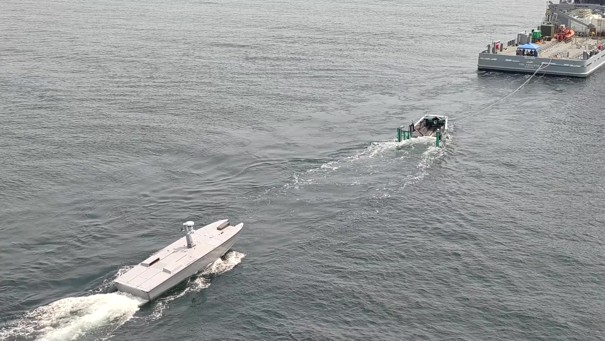
True maritime autonomy requires far more than autonomous navigation. It depends on an integrated operational layer that enables unmanned vessels to remain deployed, connect with supporting systems, receive critical resources and return to their mission with progressively less human intervention.
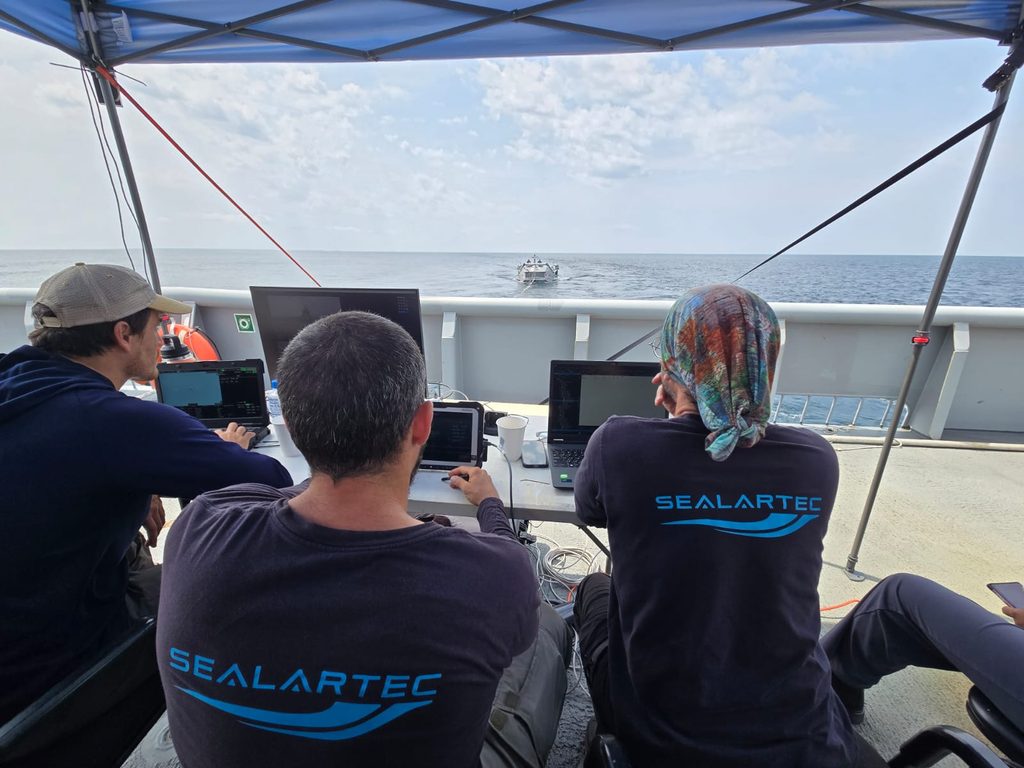
Some of the most important milestones in maritime autonomy look surprisingly quiet from the outside. A vessel on the horizon. A small team monitoring several screens. No dramatic launch, no visible spectacle, just multiple systems working together at sea.
But this was not another controlled “nice demo.” It was a step toward solving one of the most difficult challenges facing unmanned maritime operations: how to keep autonomous vessels operational at sea without repeatedly bringing them back to port or relying on people to perform every launch, recovery, connection and support task.
Autonomy Is More Than Navigation
The maritime industry often discusses autonomy in terms of navigation. Can the vessel follow a route, avoid obstacles, maintain position and operate when communications are limited or navigation signals are degraded?
These are essential capabilities, but they represent only one part of the operational challenge. A vessel may navigate autonomously for hundreds or thousands of miles, but it is not truly persistent if it must regularly leave its mission area for fuel, maintenance, payload exchange or recovery. The real question is not only whether an unmanned vessel can operate independently. It is whether the complete maritime system can sustain that vessel at sea.
The Missing Operational Layer
- Sensing and local positioning
- Guidance and control
- Relative motion compensation
- Mechanical capture and connection
- Communications between platforms
- Safety and failure management logic
- Fuel, power and data transfer
- Controlled disconnection and return to mission
Each individual function is complex. Making them work together reliably in a dynamic maritime environment is significantly more difficult.
Both platforms may move independently in surge, sway, heave, roll, pitch and yaw. Waves, wind, currents, towing forces and communication delays continuously change the geometry of the operation. A successful system must respond in real time and maintain a safe operating envelope throughout the sequence.
What This Image Represents
The photograph captures Sealartec’s team during real world testing at sea. Behind the screens, the team is monitoring the interaction between control algorithms, sensors, communications, mechanical systems and the operating environment.
Operator assisted testing is an essential stage in the transition toward full autonomy. It allows engineers to validate each part of the sequence, identify edge cases and refine the system under controlled conditions before progressively removing the human operator from the loop. The objective is not simply to automate a single maneuver. It is to create a dependable end to end process covering rendezvous, approach, capture, connection, transfer, disconnection and return to mission.
Persistence Changes the Value of an Unmanned Vessel
The operational value of an unmanned vessel is not determined only by its speed, payload or nominal endurance. It is determined by how long the vessel can continue contributing to the mission. When an unmanned platform can be supported at sea, sensors can maintain coverage, missions can continue with fewer interruptions, crewed vessels can spend less time on repetitive support tasks and personnel can remain farther from hazardous areas. At sea sustainment transforms an unmanned vessel from an independent platform with limited endurance into a persistent operational asset.
Engineering the Entire Mission Cycle
At Sealartec, we view autonomy as a system level capability. The vessel itself is only one part of the mission. The surrounding infrastructure must also support autonomous deployment, recovery, capture, connection, refueling and redeployment. Reliable maritime systems are not created by demonstrating one successful connection under ideal conditions. They are developed through continuous cycles of testing, learning, adjustment and validation across changing sea states and operational scenarios.
From Assisted Operation to Full Autonomy
The transition to fully autonomous maritime support is progressive. First, operators monitor and control the process directly. Next, individual functions are automated and validated. These functions are then integrated into a complete sequence with increasingly limited human involvement. The ultimate objective is for an unmanned vessel to locate the support system, establish communication, maneuver into position, connect safely, receive the required service, disconnect and return to its mission as one coordinated autonomous evolution.
Building the Infrastructure for Persistent Autonomy
Maritime autonomy will not scale through unmanned vessels alone. It will scale when those vessels can be launched, recovered, connected, serviced and redeployed without recreating the same dependence on people and crewed support platforms that autonomy is intended to reduce.
That is the challenge Sealartec is working to solve: the operational infrastructure that allows unmanned systems to stay at sea, remain mission ready and deliver persistent capability while reducing risk to people. More to come.